RFP response mistakes government and education vendors make (and how to fix them)
The costliest RFP mistakes happen before anyone writes a word. Learn the errors government and education vendors make, ranked by cost, and how to fix each one.

Your team can lose an RFP before writing a single word, or get disqualified over a mistake that takes minutes to prevent. For government and education vendors, the most costly mistakes often have little to do with the proposal itself.
TL;DR: What are the costliest RFP response mistakes?
The costliest mistakes happen before anyone writes: finding the RFP the day it posts, and bidding without a go/no-go decision. The most common are compliance failures that end a bid before scoring. The most ignored is skipping the debrief. Fixed in that order, the writing gets easier on its own.
The costliest RFP response mistakes happen before the RFP is published
Government and education buyers may need to research available solutions, so they consult vendors early to learn what’s possible. Vendors can inform the buyer through permitted early engagement, while the buyer remains responsible for evaluation criteria and a fair competition.
Finding the RFP on the day it posts
A team that first sees an RFP on a bid portal has weeks to respond and no relationship with the evaluators. The buyer already wrote the requirements, often with input from a vendor who showed up earlier.
A proposal written after the RFP posted rarely beats one shaped by months of conversations.
The solution is to act on buying signals, early signs a buyer may be considering a purchase, such as a new grant or an expiring contract. Buying signals can appear 6 to 18 months before an RFP.
Watch for these:
- Board meeting discussions, where a problem gets named in public sometimes before funding is approved
- Budget line items that fund a new initiative for the coming fiscal year
- Grant awards that bring new money, often with a deadline to spend it
- Contract expirations that can prompt renewal or replacement decisions
- Leadership changes, since a new superintendent or CIO can change purchasing priorities
- Published bids, the last and most crowded buying signal
Our guide to finding government RFPs before they’re published covers where these signals live. Tracking them by hand across thousands of districts, cities, and universities is unsustainable for a lean team, since board minutes alone post in a different format and on a different schedule for every entity.
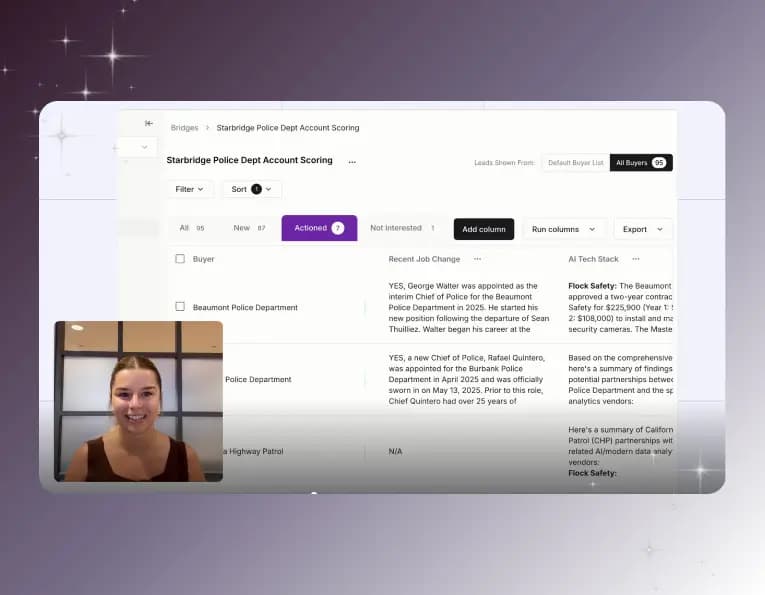
Starbridge is the AI GTM platform that helps teams selling to local government, K–12, and higher education act on early buying intent.
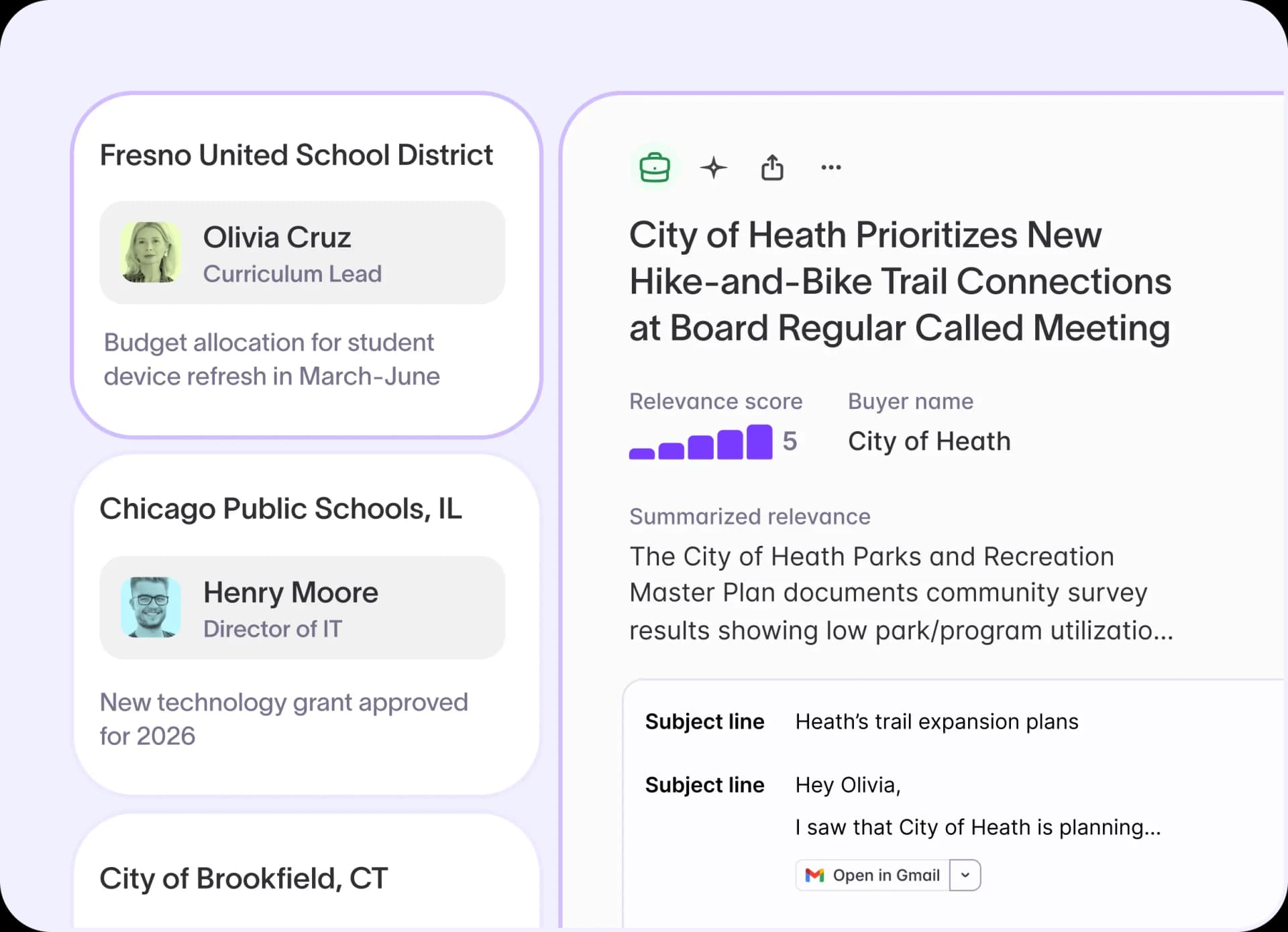
Its Buying Signals Monitor replaces that manual tracking across 320k+ entities. Each alert names a verified contact, explains why the timing is right, and suggests outreach.
In its first week on Starbridge, GovWell booked five meetings. GovWell now sources 15% of its qualified pipeline from Starbridge, a repeatable channel built on early buying signals. Book a demo today to learn more.
Bidding without a go/no-go decision
Poor bid selection is a mistake in its own right, because every hour spent on an unwinnable bid comes straight out of pipeline work. Some RFPs are wired, meaning written around a specific vendor.
A named competitor, specifications that match one incumbent’s product, and a short response window are reasons to investigate before committing hours. Assess those signals alongside your team’s access to the buyer, using our guide to spotting an RFP written for another vendor.
Score the buyer relationship, product fit, incumbent position, and your team’s capacity to respond before committing proposal hours. Use the bid/no-bid scorecard in our guide to responding to a government RFP to turn that assessment into a decision.
Starbridge’s AI RFP Finder & Proposal Writer brings that discipline to every bid portal in a territory.
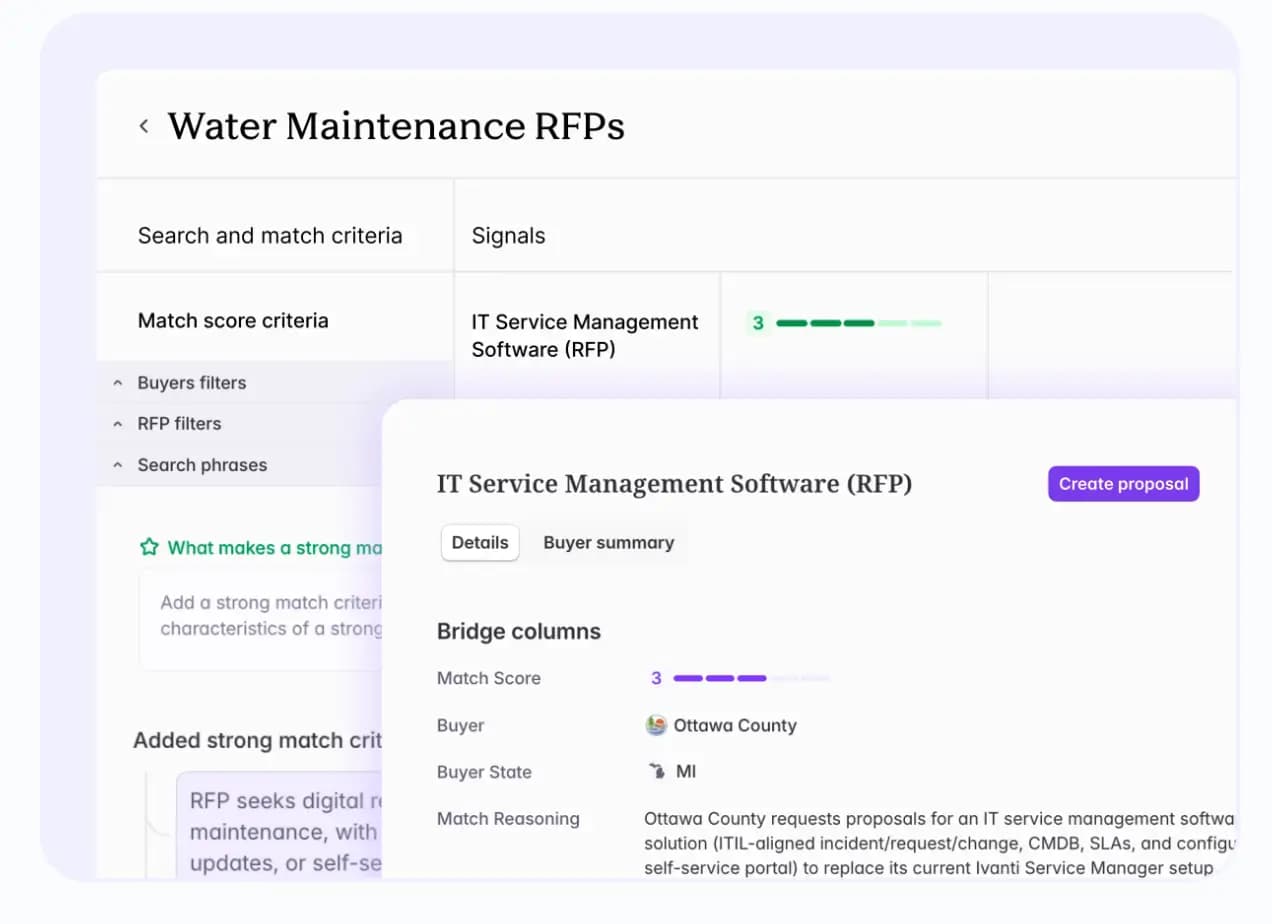
It pulls RFPs into one feed, typically within 24 to 48 hours of posting, so a relevant RFP doesn’t surface with days left. It then scores each one by product fit, region, and win likelihood and flags RFPs that name a competitor, so bid hours shift to winnable deals.
Generic answers lose to responses built on account research
Copy-pasted boilerplate and vendor-focused language in an RFP response give evaluators nothing to score beyond price.
A response earns points when it proves the vendor understands this buyer’s situation. Gather this account context first:
- Current spend in your category
- The incumbent vendor
- The incumbent’s contract terms
- The contract expiration date
- Any opt-out clauses
Next, turn board priorities and grant funding into win themes. If the board discussed chronic absenteeism and the district won a related grant, that pairing becomes the theme. Write the executive summary about the buyer’s problem and outcomes, and save product detail for later sections.
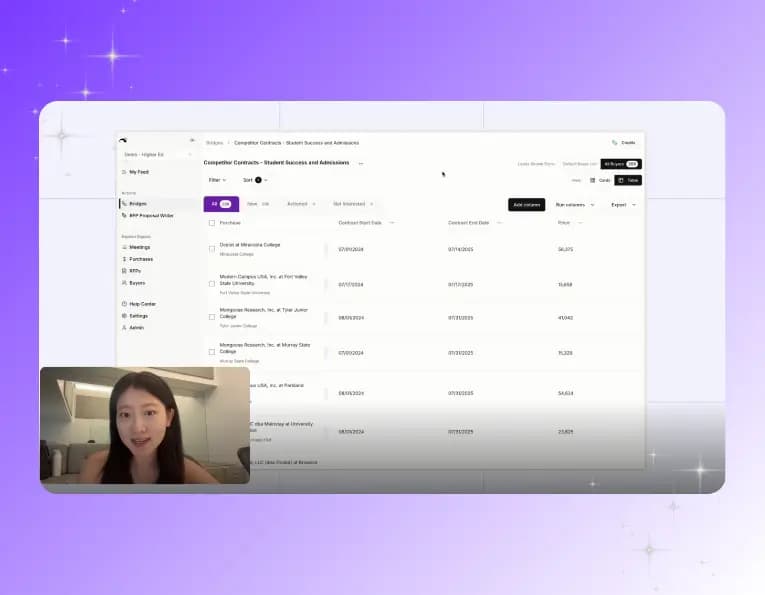
Pulling that context by hand means digging through portals, PDFs, and board packets for every account. Starbridge’s Public Spend Intelligence gives reps that context instantly, surfacing full competitor contracts with pricing, opt-out clauses, and expiration dates.
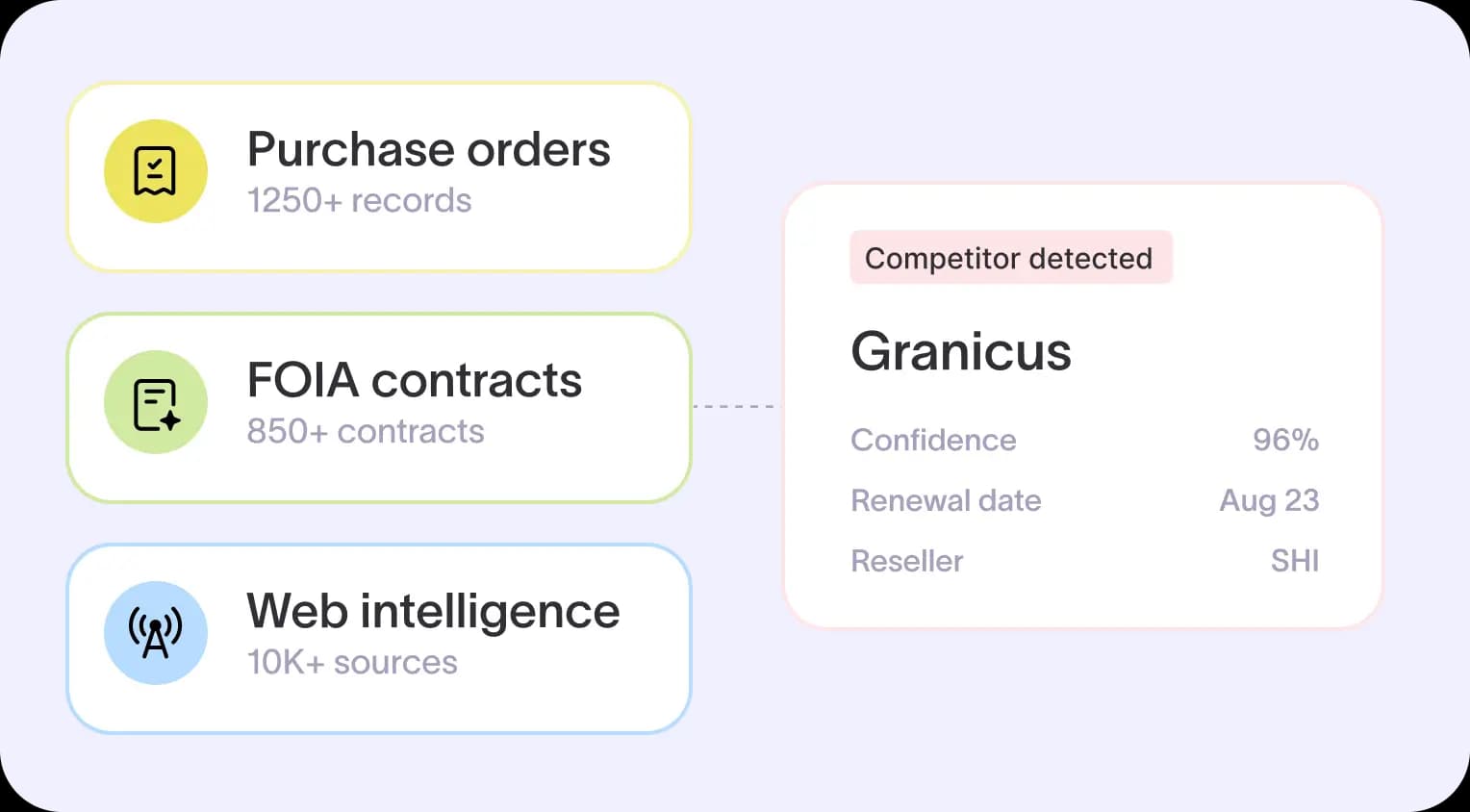
Starbridge also has purchase order data for 77% of state and local government, K–12, and higher education institutions out of the box.
Frontline Education cut research time by 90% after adopting Starbridge. Account research that took 20 to 30 minutes now comes back instantly through Ask Starbridge Chat, so Frontline reps start conversations at the buyer’s problem. Book a demo today to learn more.
Compliance mistakes that end a bid before scoring
Procurement staff commonly screen responses for compliance before scoring, and one missing item can end the review there.
A materially noncompliant response can be rejected outright, so every hour spent writing it is lost. These RFP response mistakes tend to show up in four places: mandatory requirements, deadlines and submission, pricing format, and contact with the buyer.
Missed instructions and mandatory requirements
The usual paperwork failures are missing required forms, missing signatures, and unacknowledged addenda. Format failures follow close behind, such as broken page limits and ignored formatting rules. A compliance matrix helps catch both.
Build a compliance matrix that maps each mandatory requirement and scoring criterion to an owner, due date, and answer location, then update it after every addendum.
Our government RFP response guide explains how to build and maintain the matrix.
Then mirror the RFP’s section order and headings. Evaluators score against their own outline, so a proposal that follows it lets them find and score each answer fast. A proposal organized any other way forces reviewers to hunt, and hunting costs points.
Exceptions to the buyer’s terms belong in the matrix too. Some buyers treat a material exception to insurance or indemnification terms as nonresponsive, so flag every exception and get legal sign-off before you submit.
Deadline and submission errors
Late submissions are typically rejected outright.
Public procurement rules require equal treatment of every bidder, so accepting one after the cutoff would be unfair to every vendor who submitted on time. An upload that is not successfully received by the deadline is generally treated as late.
Work backward from the deadline to reserve time for questions, reviews, approvals, signatures, and an early upload with confirmed receipt. Follow the submission planning advice in our government RFP how-to guide, adjusting the schedule to the solicitation while preserving a buffer for portal problems.
Build the buyer’s calendar into the plan as well. K–12 fiscal years typically run July to June, budget-adoption dates vary, and larger contracts may require board approval before award or execution.
Pricing evaluators can’t compare
Pricing mistakes fall into three patterns: hidden costs, bundled line items, and pricing that ignores the requested format. Procurement teams compare bids side by side in the buyer’s template, and a price sheet that breaks the template forces the evaluator to guess.
Government and education buyers spend public money and answer to boards and auditors. That accountability makes them risk-averse, so pricing they can’t compare reads as a gamble.
Match the pricing sheet exactly, down to the units and line items the buyer requested. State every implementation, training, and renewal cost up front so nothing surfaces after the award. If the pricing model needs explanation, put a short note in the section the RFP allows for assumptions and keep the template itself clean.
Contacting the buyer during the no-contact period
Publication often starts a no-contact period, and breaking it can disqualify a bid outright.
Miami-Dade County’s Cone of Silence, for instance, restricts certain oral communications about a solicitation from the time it’s advertised until a written award recommendation is issued.
Read the solicitation’s communication section before anyone on the team reaches out, including the champion who has been helpful all year. From then on, questions go through the named procurement contact.
Our guide to talking to government buyers before the RFP explains how communication rules change when a solicitation is published.
Errors that slip through without a structured review
Typos, incorrect client names, and conflicting product names damage credibility fast. A response that names another district tells evaluators the content was recycled.
Outdated content is harder to spot when multiple contributors pull from old files, such as lapsed certifications or case studies from churned customers.
Scale the pre-submission review to the deal size:
- Two-person read for small bids, with one reviewer on the compliance matrix and one on names, numbers, and dates
- Pink team review for large bids, covering the outline and win themes before full drafting
- Red team review for large bids, scoring the full draft the way evaluators will
- White team review for large bids, a final check of compliance, formatting, and signatures
Lean teams skip these reviews because drafting eats the calendar.
A fast first draft is what protects review time.
Starbridge’s AI RFP Finder & Proposal Writer drafts from your own product knowledge base, so small teams start from a repeatable first draft and can create proposals in half the time.
Its compliance matrix maps each requirement to a response, which gives the red team a ready checklist. The team still reviews every answer, finalizes formatting, and submits.
Skipping the debrief after the award
A debrief can help explain where an RFP response lost points.
Teams that skip it risk repeating the same RFP response mistakes next cycle, because nobody knows which section cost them. Request a debrief or the evaluation scores promptly after the award or award notice, win or lose, following the buyer’s request deadlines and disclosure rules.
Public records requests can even surface the winning proposal and the scoring sheets, depending on state disclosure law.
Starbridge’s Public Spend Intelligence handles that step through FOIA automation, which surfaces unredacted vendor proposals without a manual request for each bid.
Then log the lessons. Record each scoring gap, the winning vendor’s price, and any content that needs an update.
Update the content library ahead of the next bid so the fix carries forward, and note the new contract’s end date, so outreach starts before the buyer’s renewal or replacement decision.
An existing contract vehicle can simplify government purchasing
Not every government or education purchase requires a new RFP. Purchasing thresholds, approval requirements, and permitted procurement methods vary by jurisdiction, funding source, and purchase type. Sole-source purchasing is a separate exception with its own legal requirements.
Cooperative purchasing offers another route. A lead agency or cooperative has already conducted a competitive solicitation and awarded a contract. Eligible buyers can purchase through that contract if the purchase falls within its scope and meets applicable procurement rules.
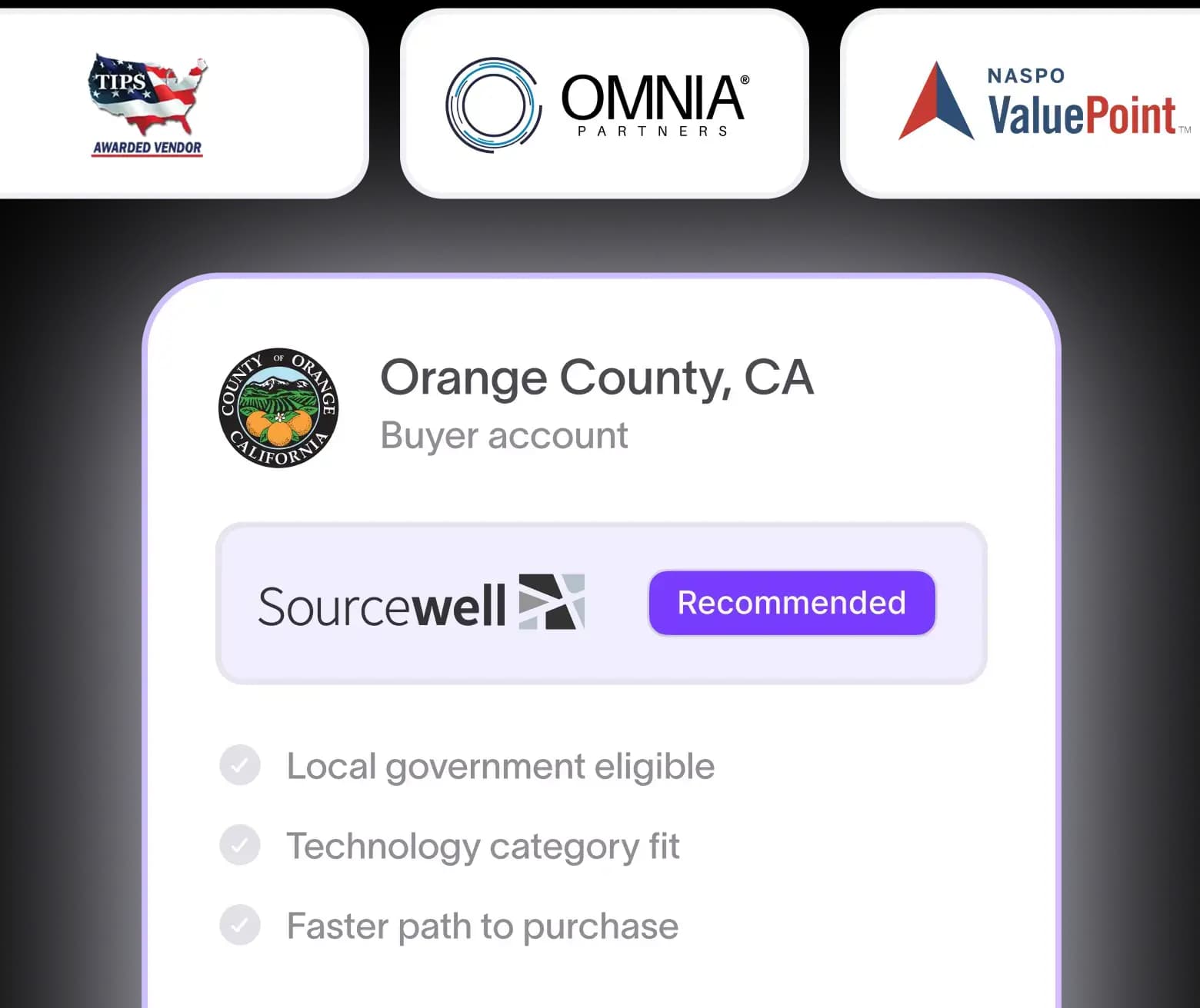
Common contract vehicles include NASPO ValuePoint, OMNIA Partners, and Sourcewell. GSA Cooperative Purchasing also covers eligible IT, security, and law enforcement categories for qualifying state and local buyers.
Ask buyers early which contract vehicles they’re authorized to use, what approvals they need, and whether your offering is covered. Understanding their purchasing options can help prevent delays between vendor selection and a signed contract.
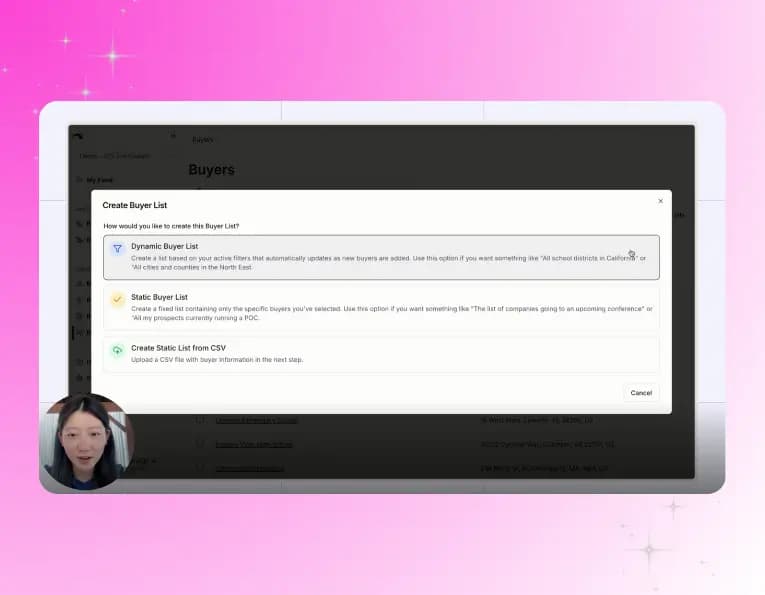
Starbridge’s Contract Vehicle Access helps vendors make use of these existing purchasing channels.
It’s included in the platform and free to get started, with Starbridge handling compliance, paperwork, and renewals to help move deals toward signed contracts. Book a demo today to learn more.
Fix the costliest RFP response mistakes first
The biggest improvements start before the RFP is published. Identify opportunities early, qualify bids before committing resources, and engage buyers while they’re still defining their needs. Once you decide to bid, focus on compliance, thorough reviews, and learning from each award decision.
Early engagement can make a real difference. For example, Starbridge alerted InquirED to a district board discussion about forming a teacher committee. InquirED reached out before the district finalized its evaluation criteria, giving the team an opportunity to engage while requirements were still taking shape.
That’s where Starbridge helps.
Its AI GTM platform helps government and education vendors spot early buying signals, research potential opportunities, identify winnable RFPs, and draft responses using approved content.
Book a demo to see how Starbridge helps your team find the right opportunities earlier and turn them into contracts.
Frequently asked questions
The most common RFP response mistakes are compliance failures, such as missing forms, unsigned documents, and unacknowledged addenda. The costliest mistakes happen earlier, when teams find RFPs too late or bid without a go/no-go decision. Skipping the post-award debrief is the most ignored mistake.
Look for a named product or competitor, specs that match one incumbent’s product, and an unusually short response window. Having no prior buyer relationship can increase bid risk, but these signs alone do not prove that the outcome is predetermined.
A go/no-go decision should score four criteria ahead of any writing. The first two are the relationship with the buyer and product fit. The other two are the incumbent’s position and the team’s capacity to respond before the deadline.
A compliance matrix is a table that traces every requirement and scoring criterion in an RFP to a specific answer and page. Teams build it the day the RFP arrives and update it after every addendum. The matrix catches gaps before procurement screens for them.
Government and education buyers can often purchase without needing a new, full RFP. Purchases below the applicable bidding threshold may qualify for a simpler process, subject to local rules and funding requirements. Cooperative vehicles like NASPO ValuePoint, OMNIA Partners, and Sourcewell can let eligible buyers purchase within a pre-awarded contract’s scope, subject to applicable purchasing requirements.